
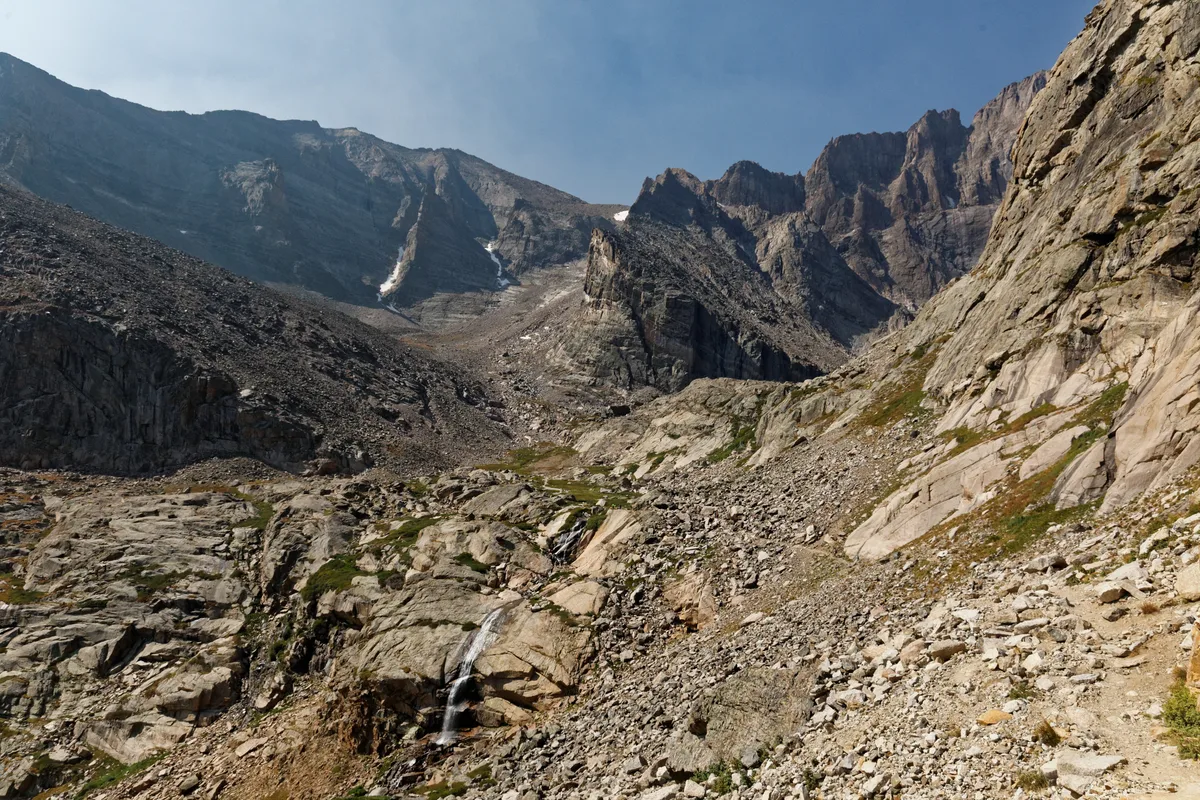
Longs Peak from the Chasm Lake Trail
Estes Park, CO
Chasm Lake sits at 11,760 feet in a dramatic cirque directly beneath the Diamond, the sheer 900-foot east face of Longs Peak. The 4.2-mile trail from the Longs Peak Trailhead gains over 2,300 feet of elevation. The lake reflects the towering Diamond face when conditions are calm.
Photography Guide
- Best Time
- morning
- Crowds
- Moderate
- Shot Types
- landscapereflectionwide
- Best Seasons
- summer
Is it a good day to go?
7-day outlookMild, dry days with light winds are the most comfortable for a visit.
Forecast by Open-Meteo. Verdicts weigh the forecast against the conditions that suit this spot.
Author's Comments
The Diamond does not reveal itself slowly. You climb for hours through krummelholz and switchbacks and a long traverse above treeline, and then you come around the final shoulder and the east face of Longs Peak is simply there, vertical and impossible, rising nine hundred feet straight out of the cirque. Chasm Lake sits at its base like an offering. I have been up here in July and again in early August, and the trail is the same hard arithmetic both times. Two thousand three hundred feet of gain. Four miles that feel longer because the air thins as you climb. By the time you reach the lake at 11,760 you have earned what you are looking at, and the mountain knows it. Start at four in the morning. I mean this practically and I mean it for the photograph. The Front Range builds weather by noon in summer, and the afternoon thunderstorms above 11,000 feet are not something to negotiate with. But the real reason is the light. First sun hits the Diamond around six and the granite goes briefly, almost embarrassingly pink, and if the lake is still - which it usually is at that hour, before the wind comes up over the saddle - you get the reflection that everyone climbs for. The final approach holds snow well into July. Bring microspikes. Bring poles. Bring more water than you think. The wide lens is the obvious choice and it is the right one. But I have made my favorite frame here with something longer, isolating the Diamond against the lake, letting the scale of the face do its own work without the sky to soften it.
Gallery
You might also like
Nearby Places

Estes Park, CO
Alberta Falls
A 30-foot cascade on Glacier Creek located 0.8 miles from the Glacier Gorge Trailhead at 9,400 feet elevation. The waterfall flows through a narrow granite gorge and is most powerful during spring snowmelt in late May and June. Surrounding subalpine forest frames the falls with spruce and fir trees.

Estes Park, CO
Loch Vale (The Loch)
A pristine alpine lake at 10,180 feet set within a dramatic U-shaped glacial valley beneath Taylor Peak and the Cathedral Wall. The 2.7-mile trail from Glacier Gorge Trailhead follows Icy Brook through old-growth subalpine forest. The lake's emerald-green water contrasts sharply with surrounding granite cliffs and occasional waterfalls.

Estes Park, CO
Sprague Lake
A small, accessible lake at 8,710 feet with a half-mile paved loop trail. The lake provides reliable reflections of the Continental Divide including Hallett Peak and Flattop Mountain. The site is wheelchair accessible and located along a short spur road from Bear Lake Road.