
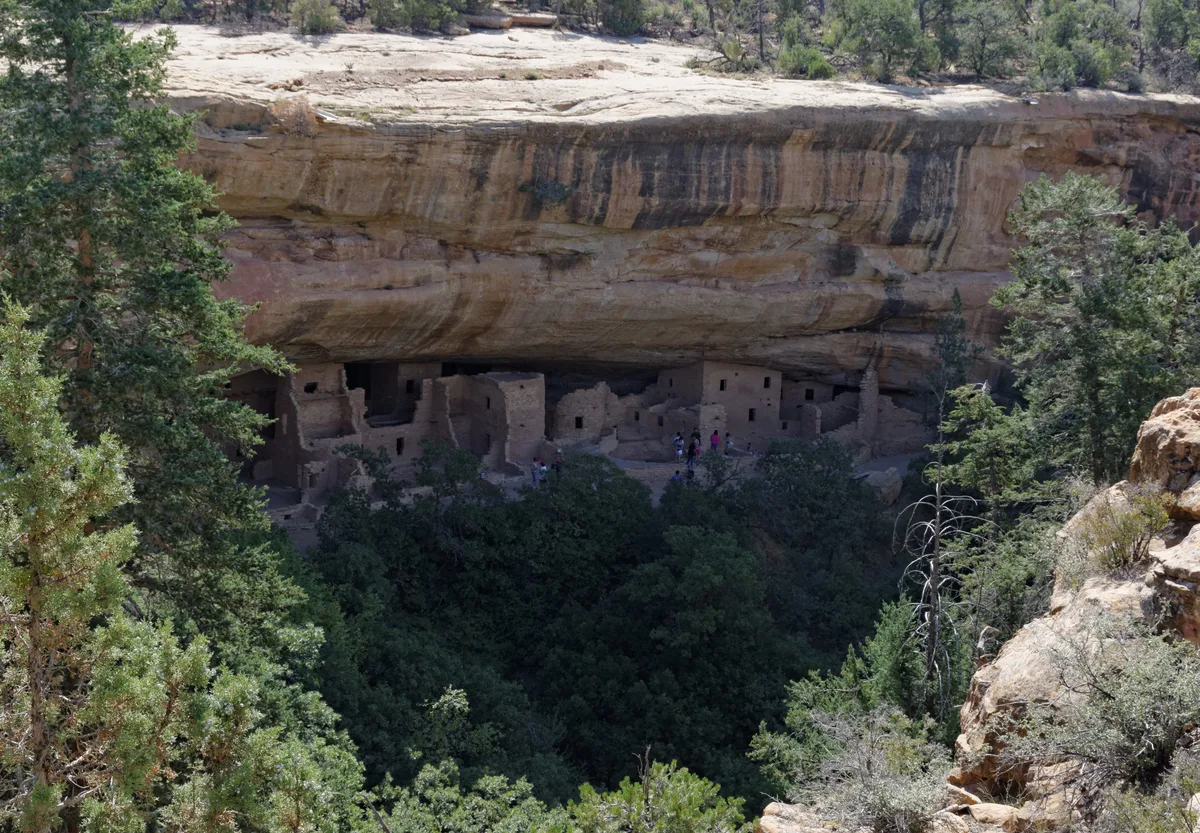
Spruce Tree House
Mancos, CO
Spruce Tree House is the third-largest cliff dwelling in Mesa Verde, containing about 130 rooms and 8 kivas built between 1211 and 1278 CE. The site sits in a deep alcove in Spruce Tree Canyon near the Chapin Mesa Archeological Museum. Rock fall concerns have periodically restricted access, but the dwelling can be viewed and photographed from the overlook.
Photography Guide
- Best Time
- morning
- Crowds
- Moderate
- Shot Types
- widedetaillandscape
- Best Seasons
- springsummerfallwinter
Is it a good day to go?
7-day outlookMild, dry days with light winds are the most comfortable for a visit.
Forecast by Open-Meteo. Verdicts weigh the forecast against the conditions that suit this spot.
Author's Comments
The first time I stood at the overlook above Spruce Tree Canyon, I understood why the people who built this place chose it. The alcove holds the dwelling the way a hand might hold a bird, and morning light enters at a particular angle that warms the sandstone from the inside out. By midday the light flattens and the depth disappears. By afternoon the alcove falls into shadow and the rooms read as a single dark mass. Morning is the only hour that gives you the architecture. I have stopped trying to make the trail-level photograph. Rock fall has closed the path more often than not in recent years, and the overlook turns out to be the better vantage anyway. From above, you see the dwelling in its full geometry - the kivas as circles cut into the floor of the alcove, the room blocks stepping back into the curve of the stone, the whole settlement reading as something composed rather than discovered. A longer lens does most of the work here. The wide shot is honest but the details are where this place lives - a doorway no taller than a child, the soot-darkened ceiling where a thousand fires burned, the masonry that has held since the thirteenth century without mortar in some places and with very little in others. Winter light is cleaner than summer light. Snow on the canyon rim and dry stone in the alcove is a photograph I have made once and would drive eight hours to make again. Check with the museum before you commit to the morning. The trail status changes. The overlook does not.
Gallery
You might also like
Nearby Places

Mancos, CO
Mesa Verde Sun Temple
Sun Temple is a D-shaped ceremonial structure on the mesa top in Mesa Verde National Park that was never completed before the Ancestral Puebloans departed the area around 1300 CE. The double-walled masonry construction is among the finest stonework at Mesa Verde. The site sits on a prominent point between Cliff Canyon and Fewkes Canyon with views to the cliff dwellings below.

Mancos, CO
Cliff Palace
Cliff Palace is the largest cliff dwelling in North America, containing approximately 150 rooms and 23 kivas built by Ancestral Puebloans around 1190-1260 CE. The alcove structure is nestled beneath a massive sandstone overhang in a canyon wall within Mesa Verde National Park. The site is accessible only via ranger-guided tours during the open season.

Mancos, CO
Balcony House
Balcony House is one of the most dramatic cliff dwellings in Mesa Verde National Park, accessible only by climbing a 32-foot ladder and crawling through a narrow tunnel. The site contains about 40 rooms and two kivas tucked into a south-facing alcove on the cliff face. The approach provides striking views down Soda Canyon.