
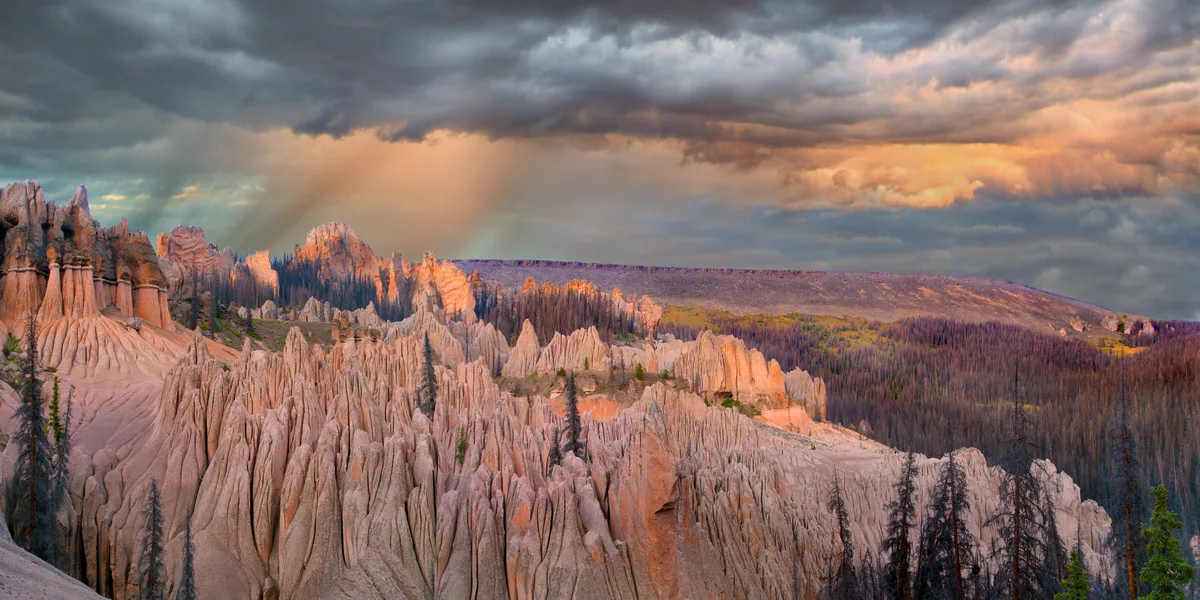
Wheeler Geologic Area
Creede, CO
Wheeler Geologic Area features dramatic volcanic tuff formations eroded into spires, pinnacles, and hoodoos over millions of years. Once nominated as a national monument, it is one of the most remote and least-visited geologic landmarks in Colorado. The formations range in color from white to pale pink against a dark forest backdrop.
Photography Guide
- Best Time
- golden hour
- Crowds
- Quiet
- Shot Types
- widelandscapedetail
- Best Seasons
- summer
Is it a good day to go?
7-day outlookMild, dry days with light winds are the most comfortable for a visit.
Forecast by Open-Meteo. Verdicts weigh the forecast against the conditions that suit this spot.
Author's Comments
The road in is the first thing you have to make peace with. Fourteen miles of teeth-rattling 4WD that takes most of a day, or a fourteen mile hike across high country that takes longer. Either way, Wheeler asks something of you before it shows you anything, and I think that is part of why the place still feels the way it does. It was nominated as a national monument once, back when monuments were easier to make. The designation never quite took, and what might have become a busy roadside stop instead became one of the strangest and quietest landscapes in Colorado. Volcanic tuff weathered over millions of years into pale spires and hoodoos, white and faintly pink, set against the dark green of the spruce forest behind them. The contrast does most of the work. In late July, at golden hour, the formations go almost luminous, and the surrounding wilderness reads nearly black by comparison. I have been twice. Both times I had the place almost entirely to myself, which is not something I can say about anywhere else in the state at this kind of geologic scale. The first visit I shot wide, trying to make sense of the whole amphitheater. The second I worked closer, looking at the way single pinnacles caught light against shadow, the textures in the tuff, the small details that get lost in the wider frames. Bring water. Bring more than you think. There is nothing out here, and that is exactly the point.
Gallery
You might also like
Nearby Places

Creede, CO
North Clear Creek Falls
North Clear Creek Falls is a 100-foot waterfall that plunges over a rhyolite cliff into a rocky gorge. A short paved trail leads to an overlook with a direct view of the falls surrounded by dense spruce forest. The waterfall is located along the Silver Thread Scenic Byway between Lake City and Creede.

Lake City, CO
Slumgullion Pass and Earthflow
Slumgullion Pass at 11,530 feet provides a viewpoint over one of the most visually distinctive landslides in North America, the Slumgullion Earthflow. The still-active landslide displays a striking yellow-green color caused by mineral-stained clay visible against the surrounding green forest. An interpretive overlook on the Silver Thread Scenic Byway offers direct views of the entire slide path.

Lake City, CO
Lake San Cristobal
Lake San Cristobal is the second largest natural lake in Colorado, formed approximately 700 years ago by the Slumgullion Earthflow landslide that dammed the Lake Fork of the Gunnison River. The lake is surrounded by dense forests and mountain peaks that provide vivid fall color reflections. It is located two miles south of the historic mining town of Lake City.