
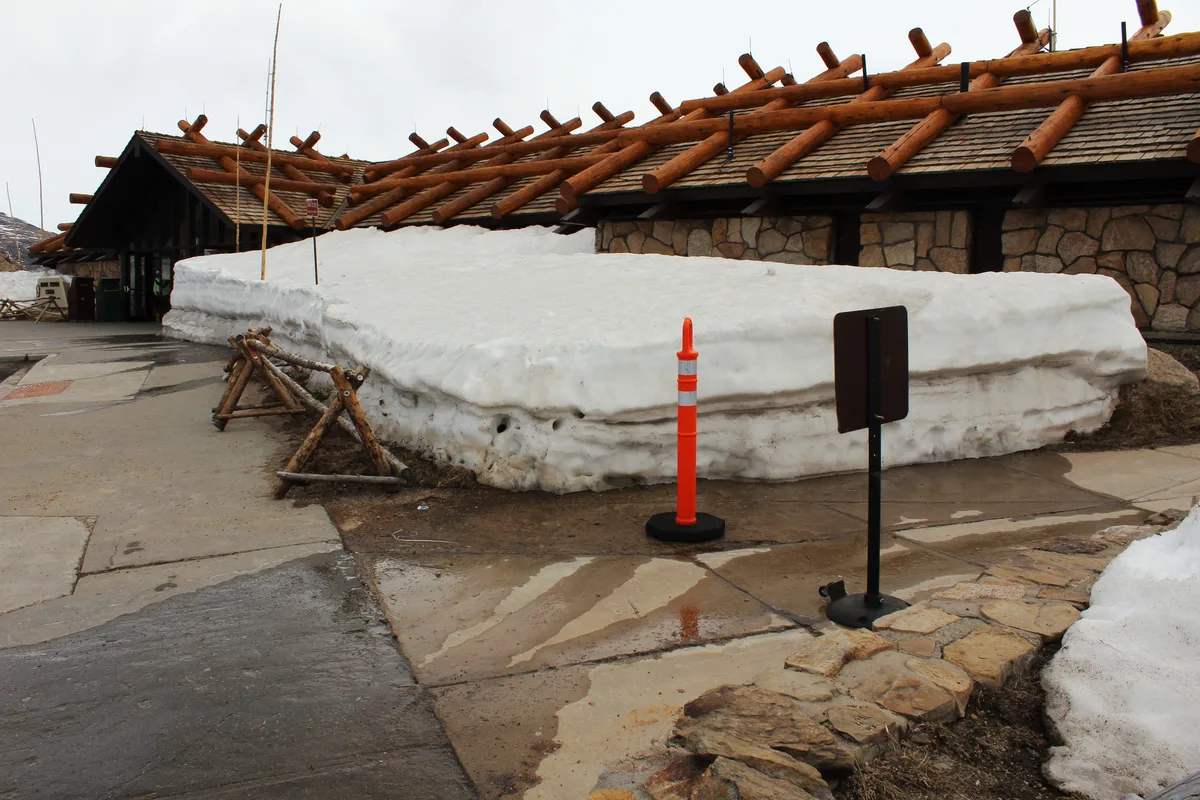
Alpine Visitor Center and Fall River Pass
Estes Park, CO
The highest visitor center in the National Park System at 11,796 feet, situated along Trail Ridge Road at Fall River Pass. A short trail behind the center ascends to panoramic 360-degree views of the Never Summer Mountains and Mummy Range. The surrounding alpine tundra supports miniature wildflowers from late June through August.
Photography Guide
- Best Time
- morning
- Crowds
- Busy
- Shot Types
- widelandscapedetail
- Best Seasons
- summer
Is it a good day to go?
7-day outlookMild, dry days with light winds are the most comfortable for a visit.
Forecast by Open-Meteo. Verdicts weigh the forecast against the conditions that suit this spot.
Author's Comments
At 11,796 feet, the air does something to the light that I have never quite been able to explain. It is thinner, certainly, but it is also cleaner in a way that affects color. The blues go deeper. The shadows have edges. On a July morning at Fall River Pass, when the sun is still climbing and the tundra is just beginning to warm, the Never Summer range to the west holds a quality of clarity that lower elevations simply cannot produce. The trail behind the visitor center is short and it will still leave you breathless. Two hundred feet of climb at this altitude is not the same two hundred feet you know from sea level. Go slowly. Stop often. The reward at the top is a full circle of mountains, the Mummy Range to the north, the Never Summers across the valley, and ridgelines folding into the distance in every direction. The wildflowers are what surprised me the first time. They are tiny. Alpine forget-me-nots no bigger than a fingernail, sky pilot in clusters low to the ground, moss campion pressed flat against the stone. This is a landscape that asks you to photograph it twice, once wide for the panorama and once close for the miniature world at your feet. Both photographs are true. Be off the ridge by noon. The thunderstorms here are not a suggestion, they are a near-daily certainty in summer, and there is nothing between you and the sky. Come early. The crowds build through the morning and the light softens past its best by ten. This is one of the few places where altitude itself is the photograph.
Gallery
You might also like
Nearby Places

Grand Lake, CO
Milner Pass and Continental Divide
Milner Pass at 10,758 feet marks where Trail Ridge Road crosses the Continental Divide. A sign marks the exact divide where water flows to both the Atlantic and Pacific oceans. The Poudre Lake trailhead here provides access to views in both directions along the divide.

Estes Park, CO
Rock Cut and Tundra Communities Trail
A paved 1-mile interpretive trail at 12,110 feet along Trail Ridge Road that traverses fragile alpine tundra with 360-degree views. The trail climbs to Toll Memorial at 12,310 feet, providing views of the Continental Divide, Gorge Lakes, and Forest Canyon. Miniature tundra wildflowers bloom from late June through early August.

Estes Park, CO
Trail Ridge Road - Forest Canyon Overlook
An overlook at 11,762 feet along Trail Ridge Road providing sweeping views into the glacially carved Forest Canyon and Gorge Lakes below. The vantage point reveals the full scale of the Continental Divide's eastern slope. Alpine tundra wildflowers bloom in the foreground during July.